Takachiho Gorge – Japan’s Most Spectacular Volcanic Canyon
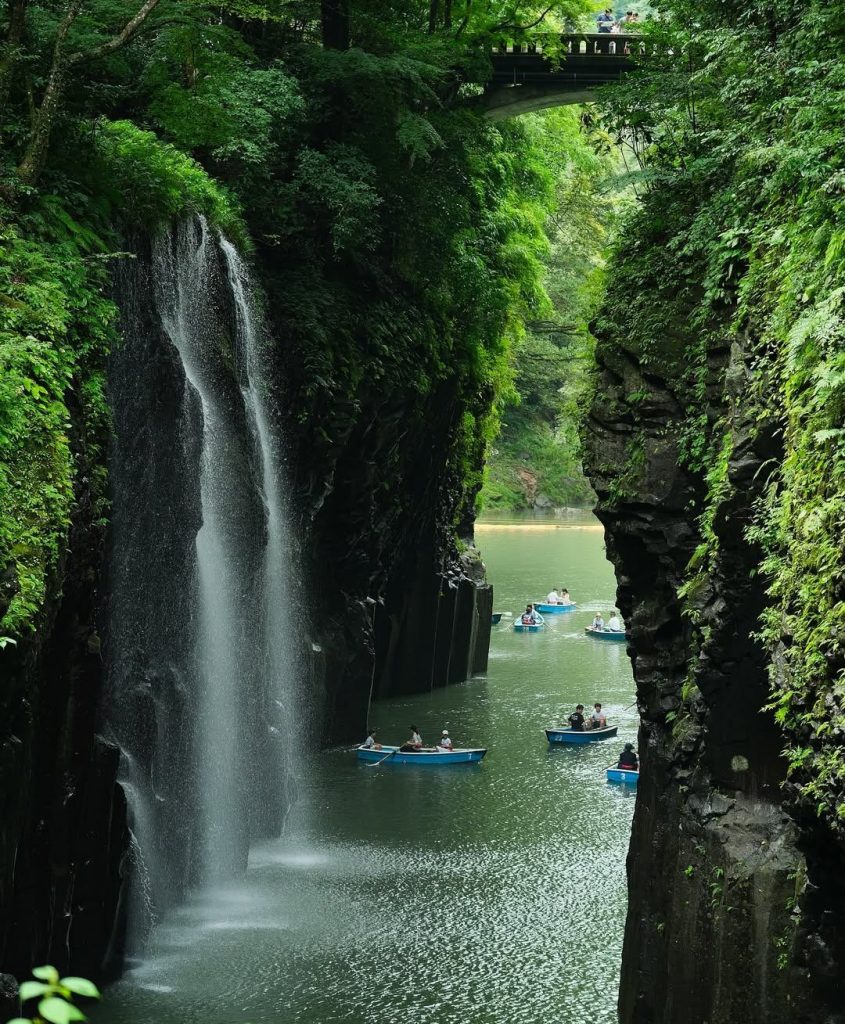
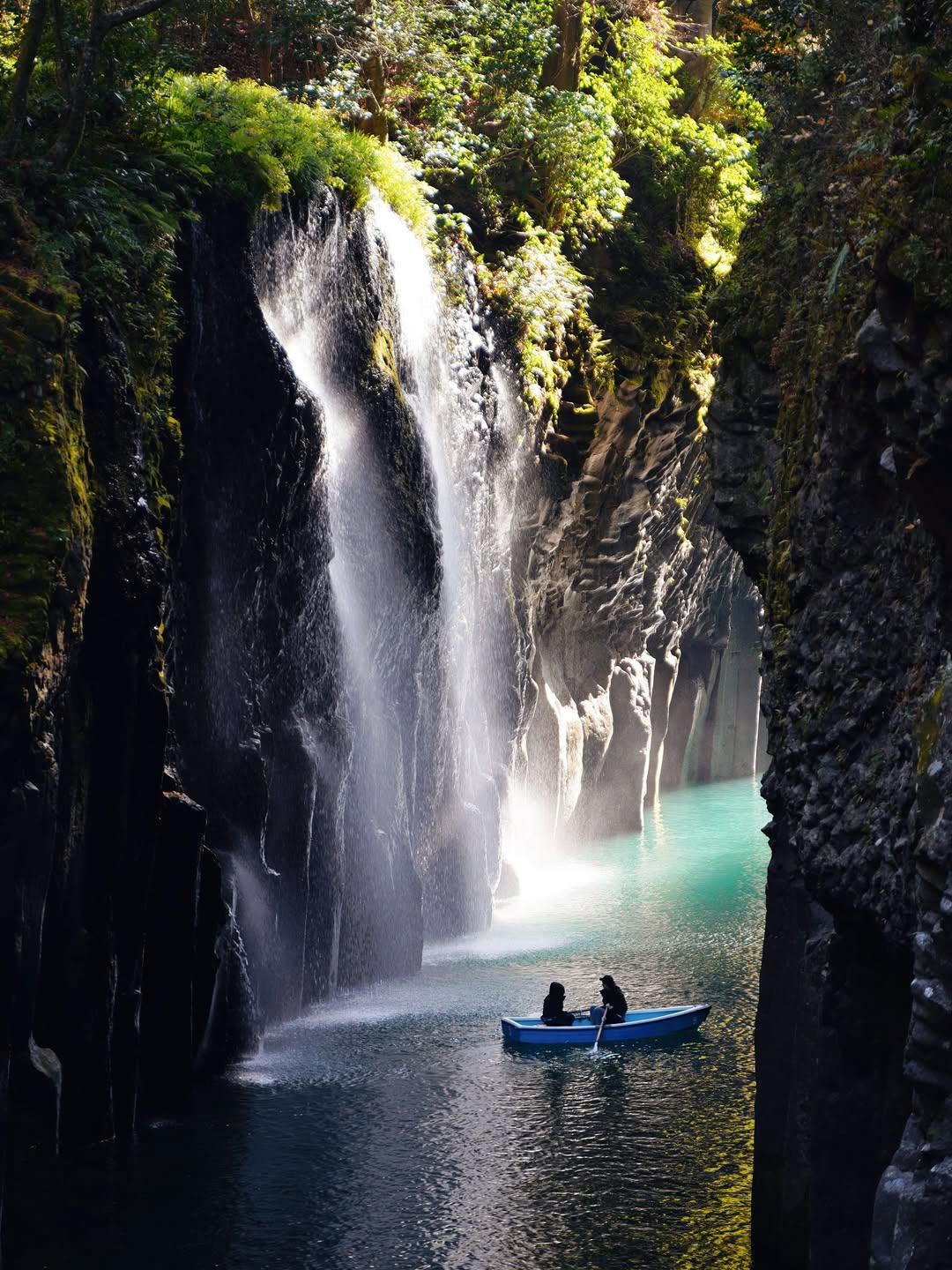
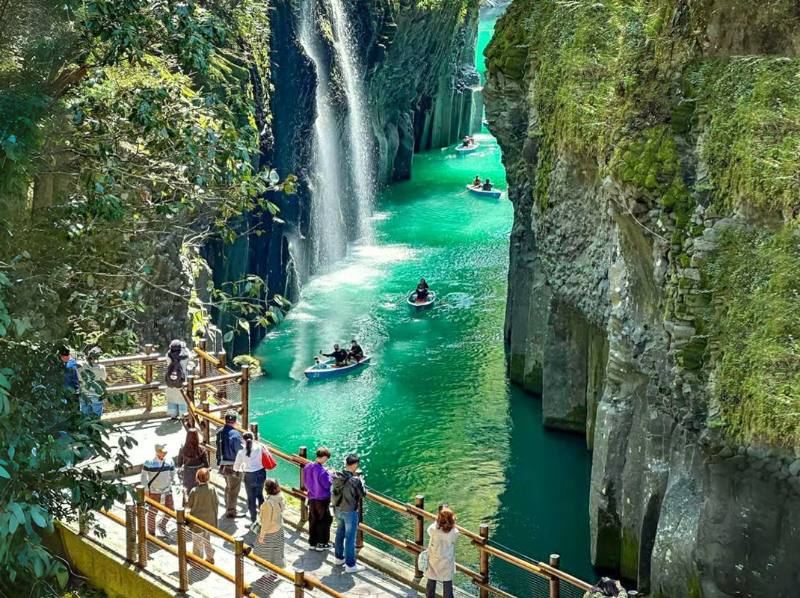
Takachiho Gorge cuts through Miyazaki Prefecture in southern Japan, where emerald-green water flows between 80-meter basalt cliffs. Mount Aso erupted here 100,000 years ago, and the Gokase River spent millennia carving through the cooled lava. Now you can row a boat right up to the 17-meter Manai Falls that drops between the rock walls.
Takachiho Gorge
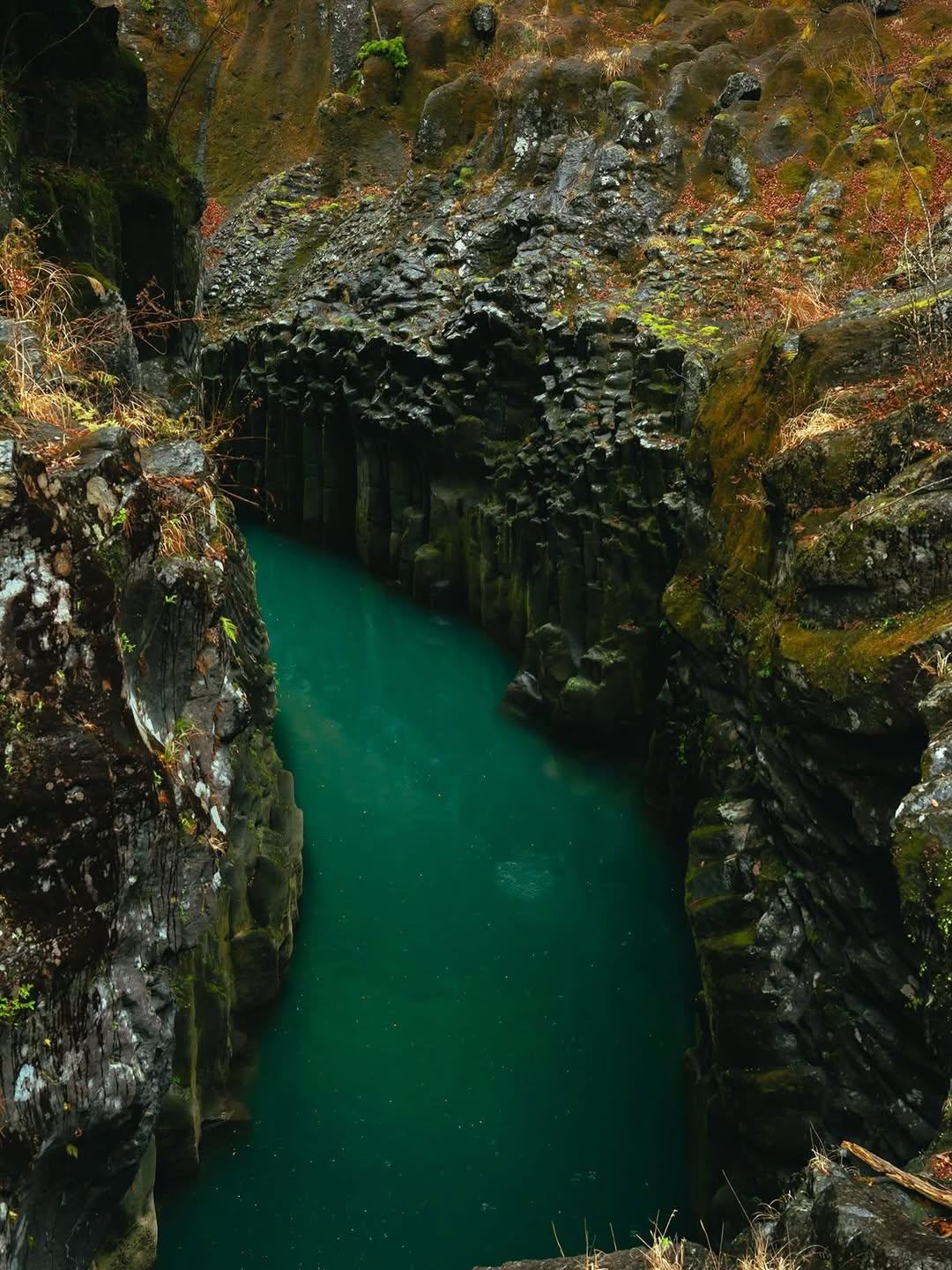
Takachiho Gorge is a V-shaped canyon formed by the Gokase River cutting through volcanic basalt in northern Miyazaki Prefecture. The gorge walls consist of columnar basalt columns that reach 80 to 100 meters high, with the canyon narrowing to just 3 meters wide at certain points.
The site holds designation as a National Scenic Beauty and Natural Monument. The main attraction is rental rowboats that provide access to the base of Manai Falls, a 17-meter waterfall. The gorge water maintains an emerald-green color during normal conditions, though heavy rainfall causes temporary closures and discoloration.
A 1-kilometer walking trail runs along the gorge rim with observation platforms overlooking the canyon and waterfall.
Key facts:
- Location: Takachiho, Miyazaki Prefecture, Kyushu
- River: Gokase River
- Length: 7 km
- Depth: 80–100 m
- Rock type: Columnar basalt
- Age: ~100,000 years
- Main attraction: Manai Falls (17 m)
How was Takachiho Gorge formed?
Takachiho Gorge formed approximately 100,000 years ago during a series of pyroclastic flow eruptions from Mount Aso, located 60 kilometers to the northwest. These eruptions sent superheated volcanic material down the Gokase River valley, covering the area in layers of basalt lava.
As the lava cooled rapidly, it contracted and fractured into vertical hexagonal columns — a geological process that creates columnar jointing. The same process formed similar structures at the Giant’s Causeway in Northern Ireland and Devil’s Postpile in California. At Takachiho, these columns can reach several meters in diameter and extend the full height of the gorge walls.
Over the following millennia, the Gokase River eroded the softer rock layers beneath the hardened basalt, undercutting the columns and causing sections to collapse. This erosion created the narrow, deep V-shape of the present gorge. The river continues to erode the canyon floor, gradually deepening the gorge.
The basalt’s distinctive pattern of vertical columns gives the cliff faces their geometric appearance. Local descriptions sometimes refer to this as resembling “dragon scales” due to the interlocking hexagonal pattern visible on the rock surface.
Takachiho Mythology & Legends
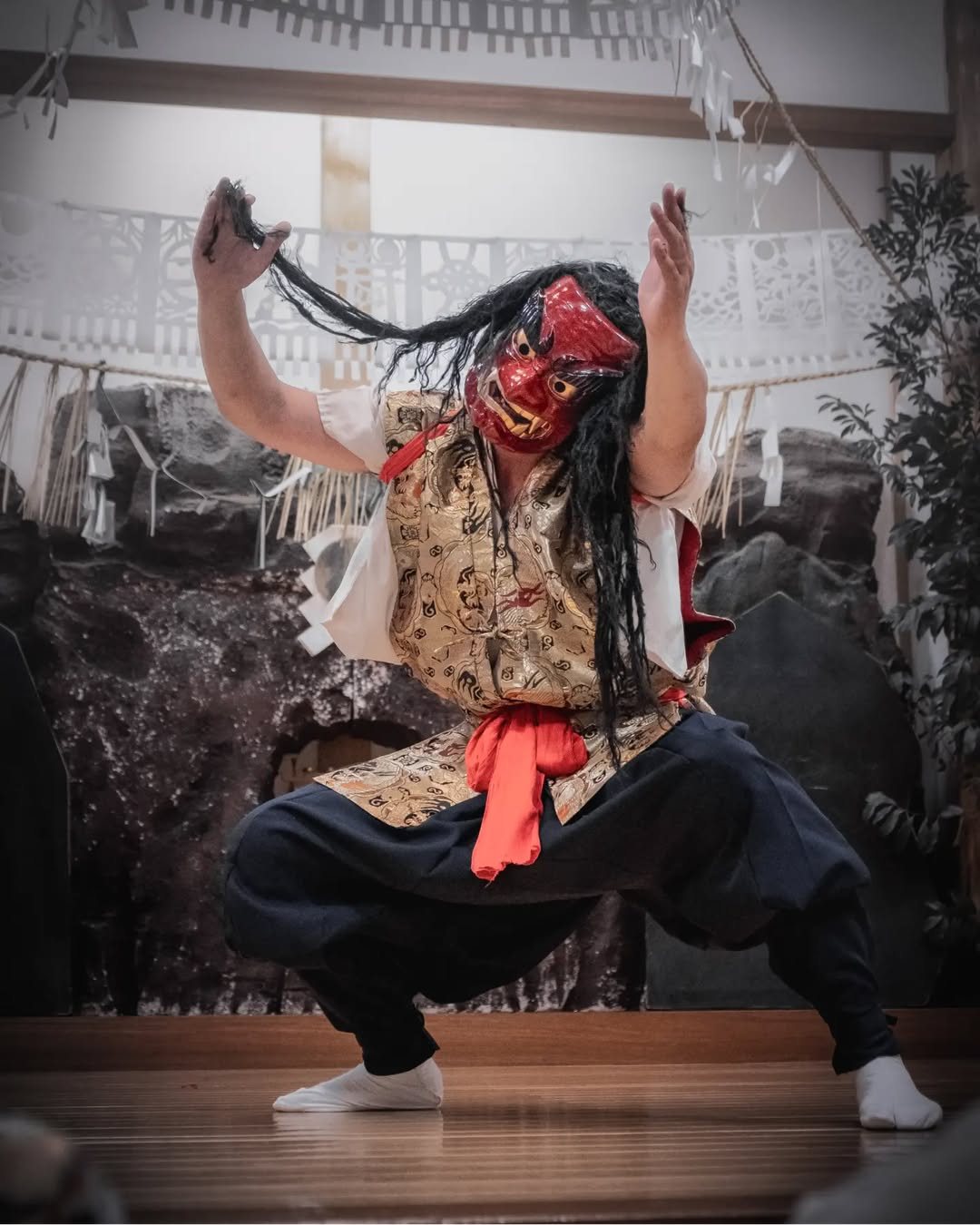
Takachiho appears in Japan’s oldest texts, the Kojiki (712 CE) and Nihon Shoki (720 CE), as the place where Amaterasu, the sun goddess, hid in a cave after a conflict with her brother. Her withdrawal plunged the world into darkness. Eight million deities gathered at a nearby gorge to plan her return — the goddess Ame-no-Uzume danced, the gods laughed, and Amaterasu emerged to see what the noise was about. Light returned to the world.
The same texts describe Takachiho as the landing point for Ninigi-no-Mikoto, Amaterasu’s grandson, when he descended from the heavens to rule Earth. This established the divine lineage of Japan’s Imperial family.
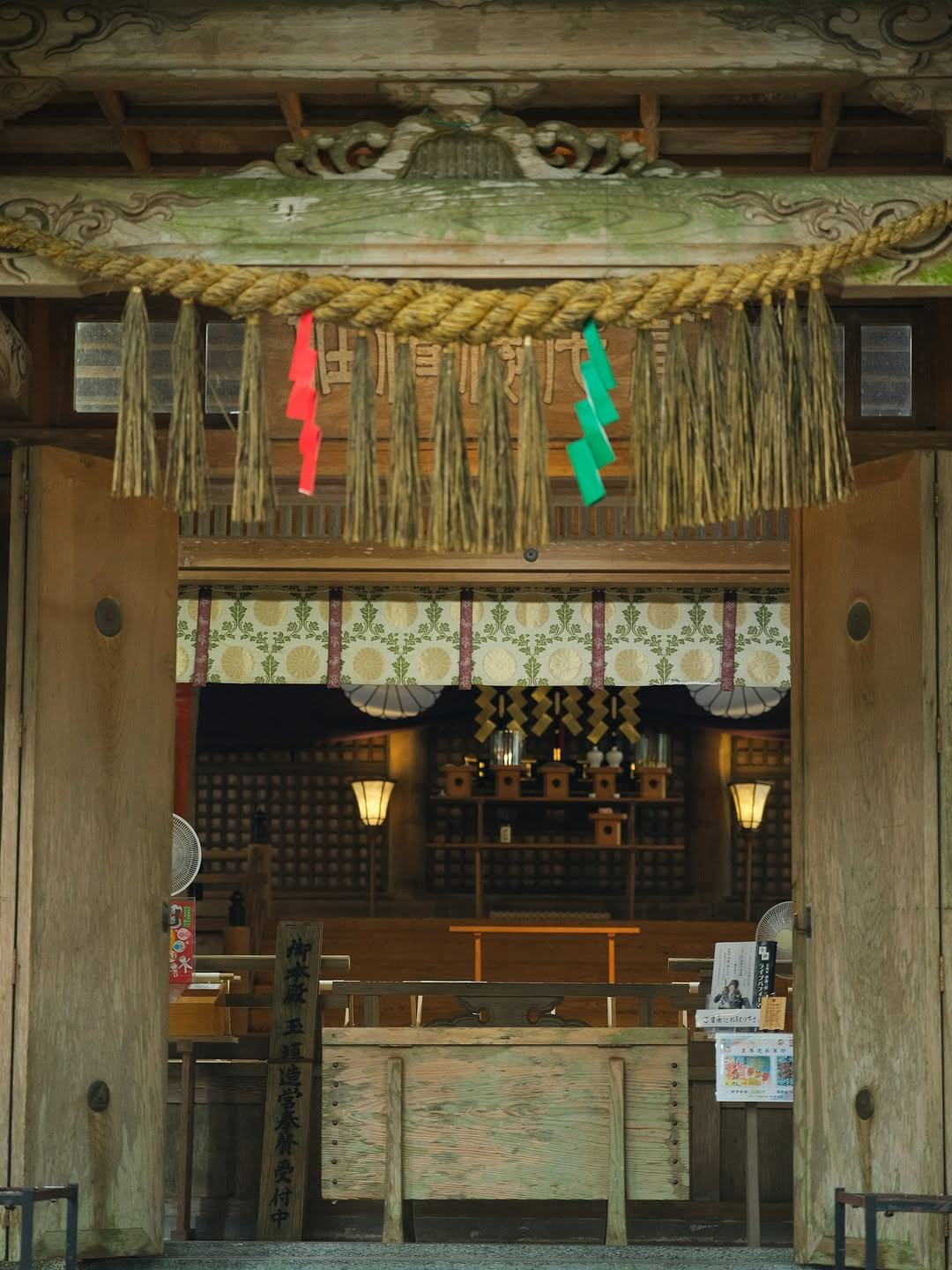
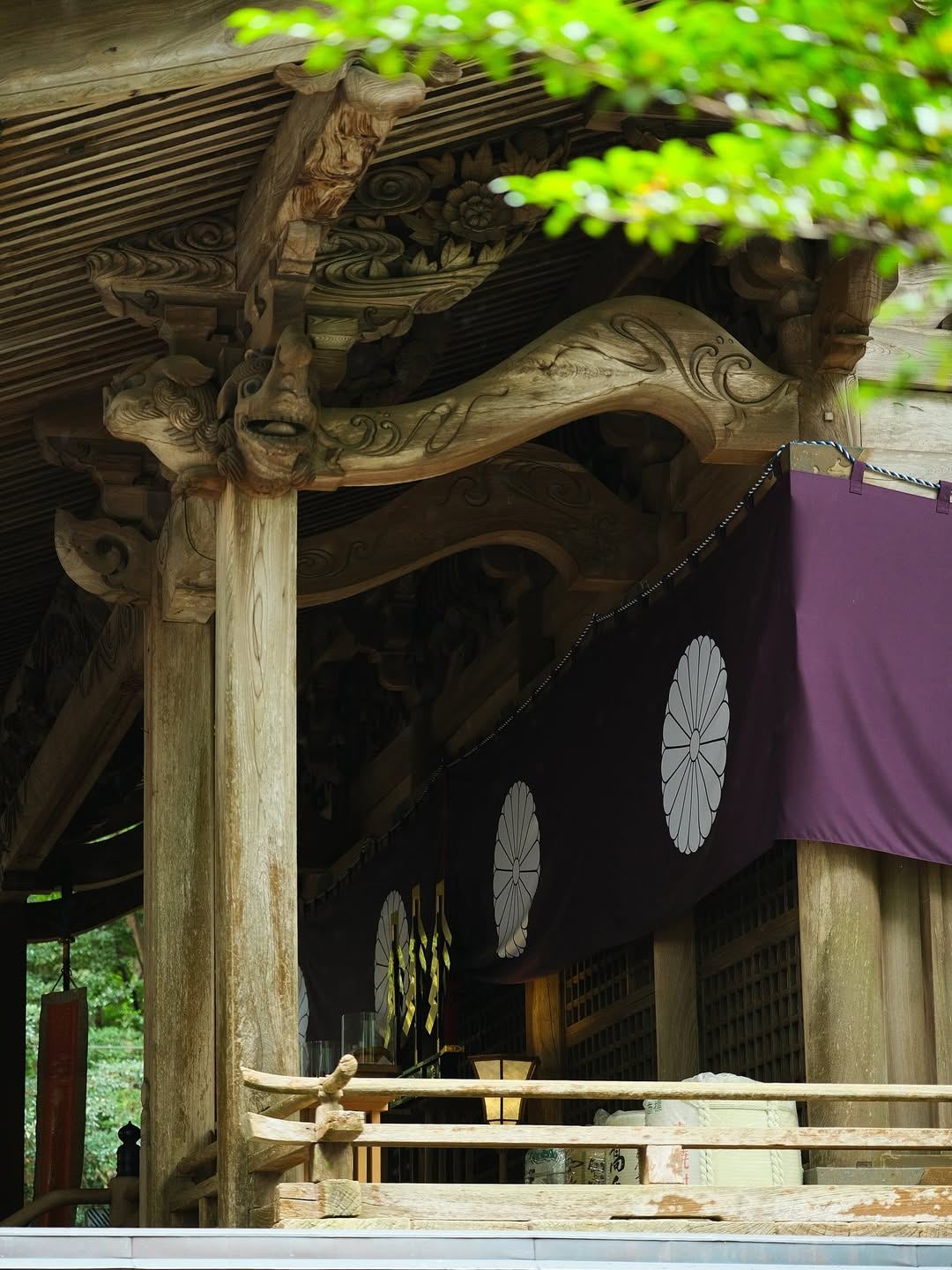
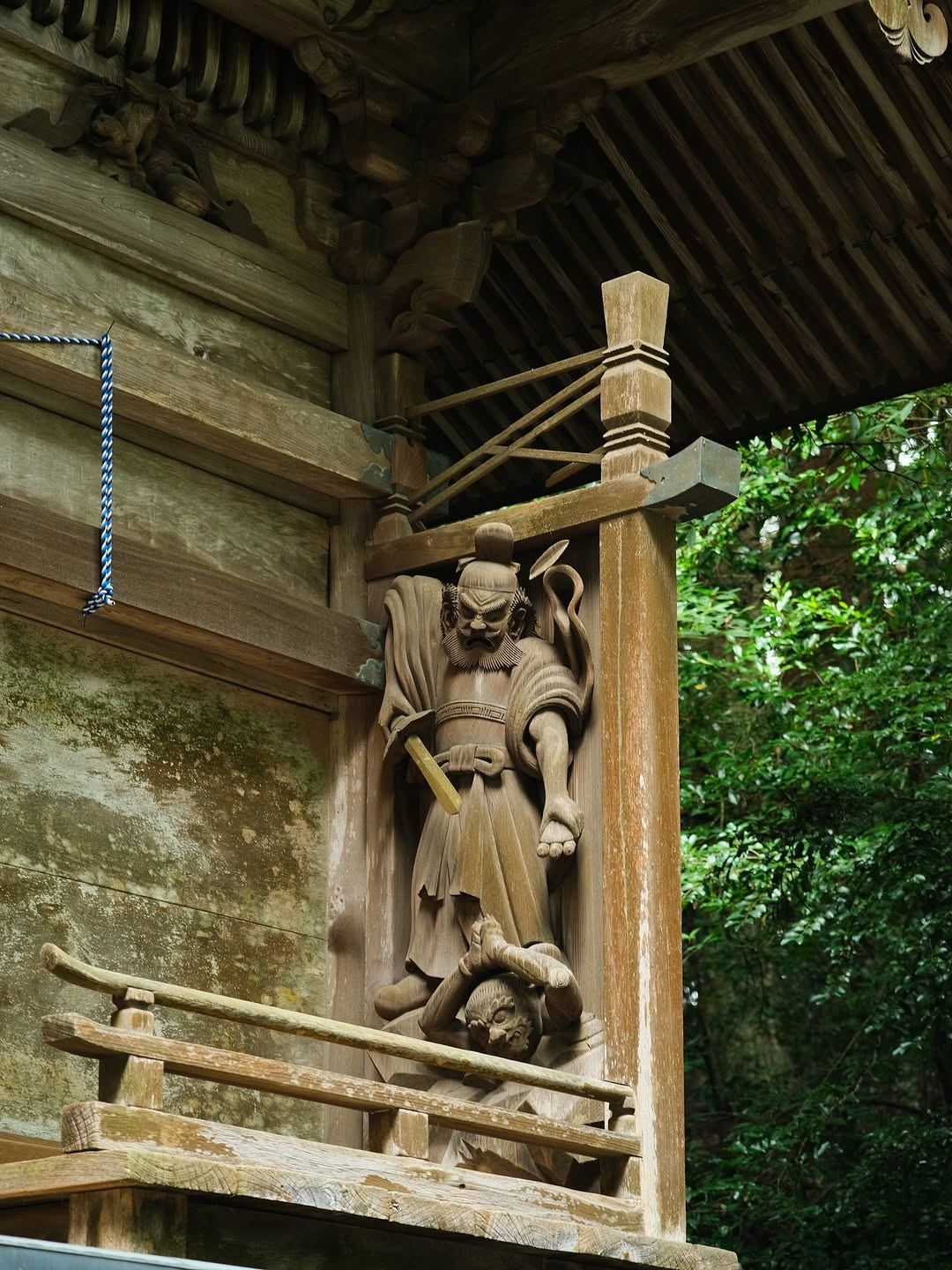
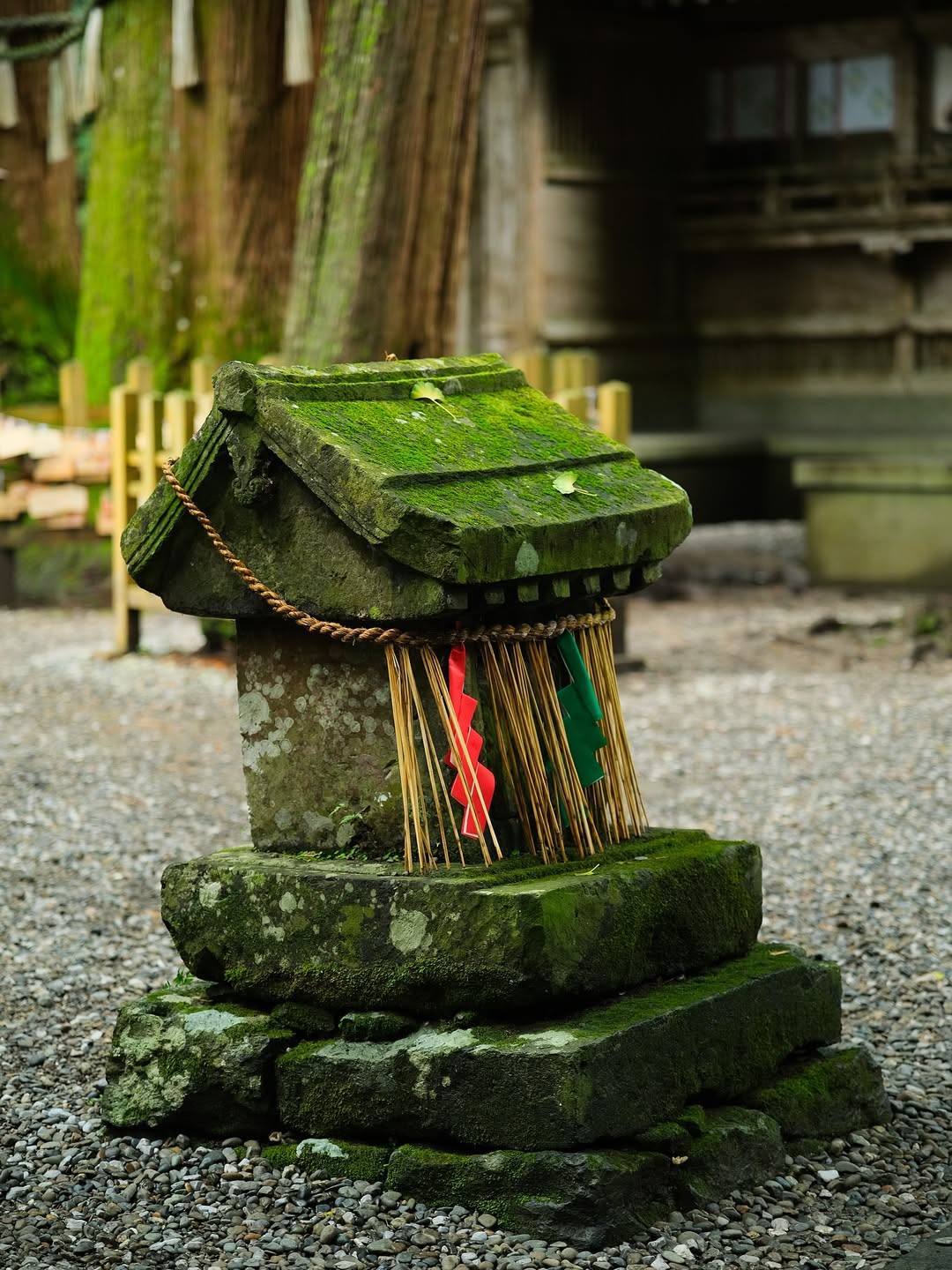
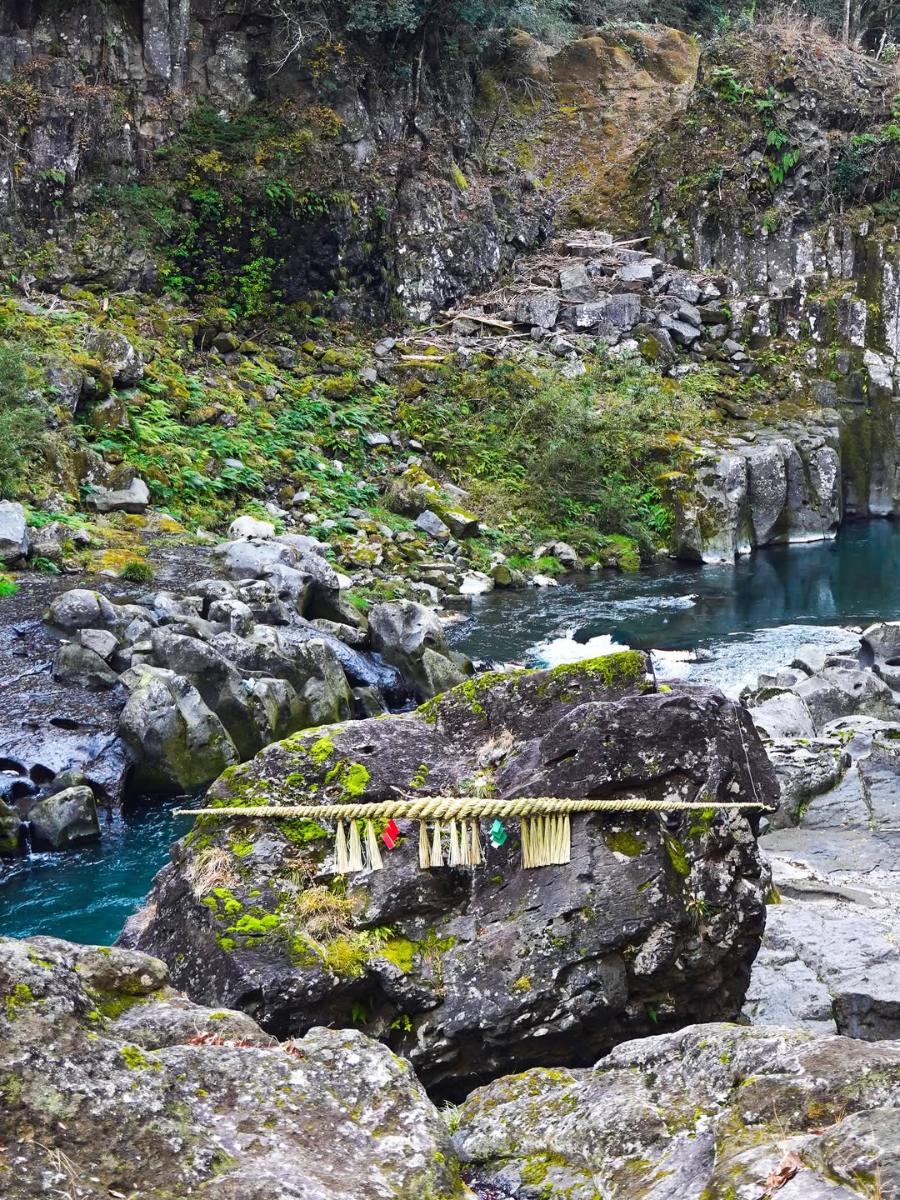
The Amano-Iwato Shrine sits above the gorge containing the cave from the myth. The cave itself is closed to visitors but visible from across the gorge, marked by a sacred rope. Takachiho Shrine, about 1,900 years old, hosts Yokagura dance performances that reenact these myths on Saturday evenings from mid-November to mid-February.
Boat Rides at Takachiho Gorge
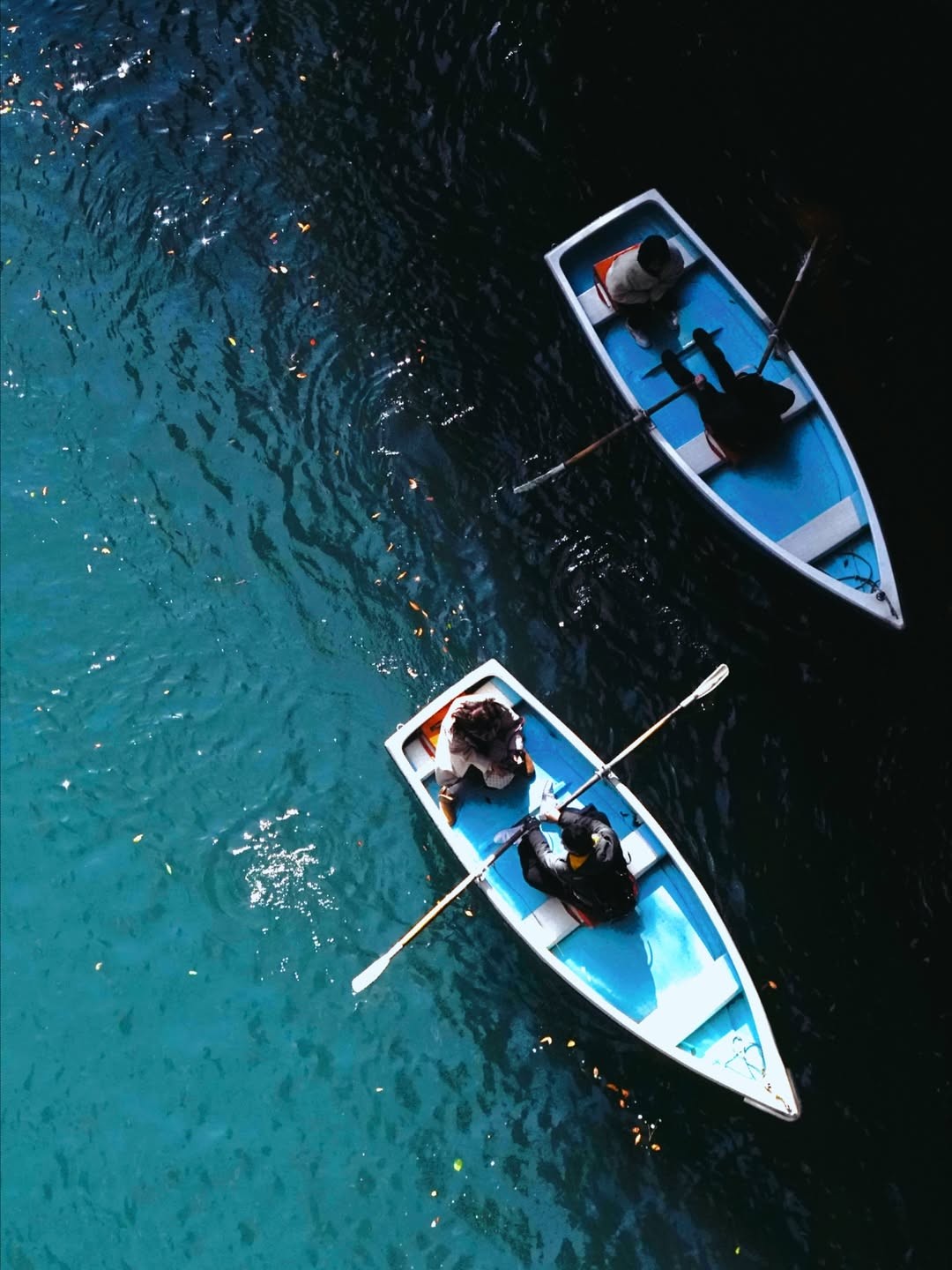
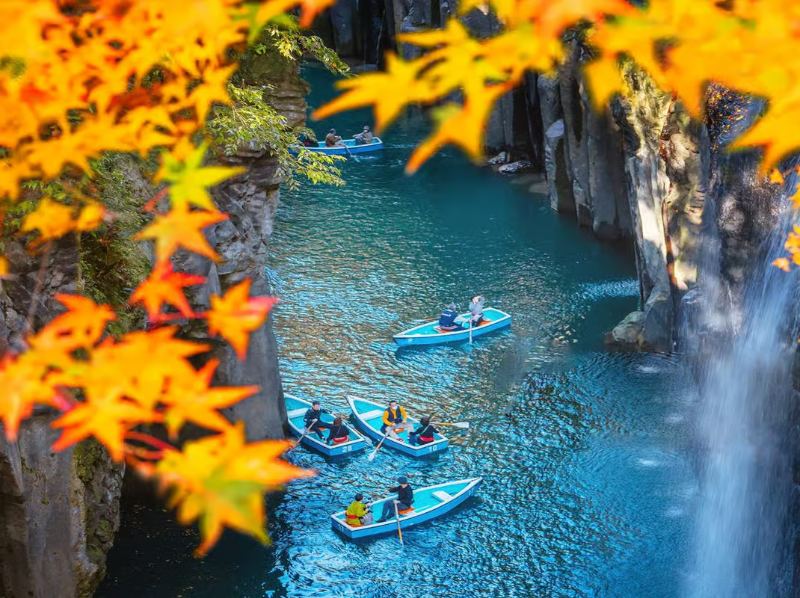
Rowing through Takachiho Gorge puts you at water level between the basalt cliffs, where the canyon walls narrow to 3 meters wide in some sections. The 30-minute route takes you directly to the base of Manai Falls, where the 17-meter waterfall drops into the emerald-green river. The boats are stable and easy to row — most visitors have no difficulty navigating them, even without prior rowing experience.
How do I rent a boat at Takachiho Gorge?
You can reserve a boat through the official Takachiho Tourist Association website. Reservations open at 9:00 AM, two weeks before the desired date. Online reservations are the best way to guarantee a ride. When availability remains, the rental station may sell same-day tickets, but on peak days (weekends/holidays and high season) these can sell out early. If you’re visiting during a busy period, reserve ahead.
Rental details:
- Working hours: 8:30 to 17:00 (departures until 16:30)
- ¥4,100–¥5,100 per boat (pricing varies by date – check the booking calendar)
- Duration: 30 minutes
- Capacity: Maximum 3 passengers per boat (4 passengers if two are under 6 years old)
When should I book?
Weekend and holiday slots sell out weeks in advance, particularly during spring (March–April) and autumn (October–November). Weekday availability is better but still limited. The hours between 10:00 AM and 12:00 PM provide the best natural lighting on Manai Falls for photography.
What about weather closures?
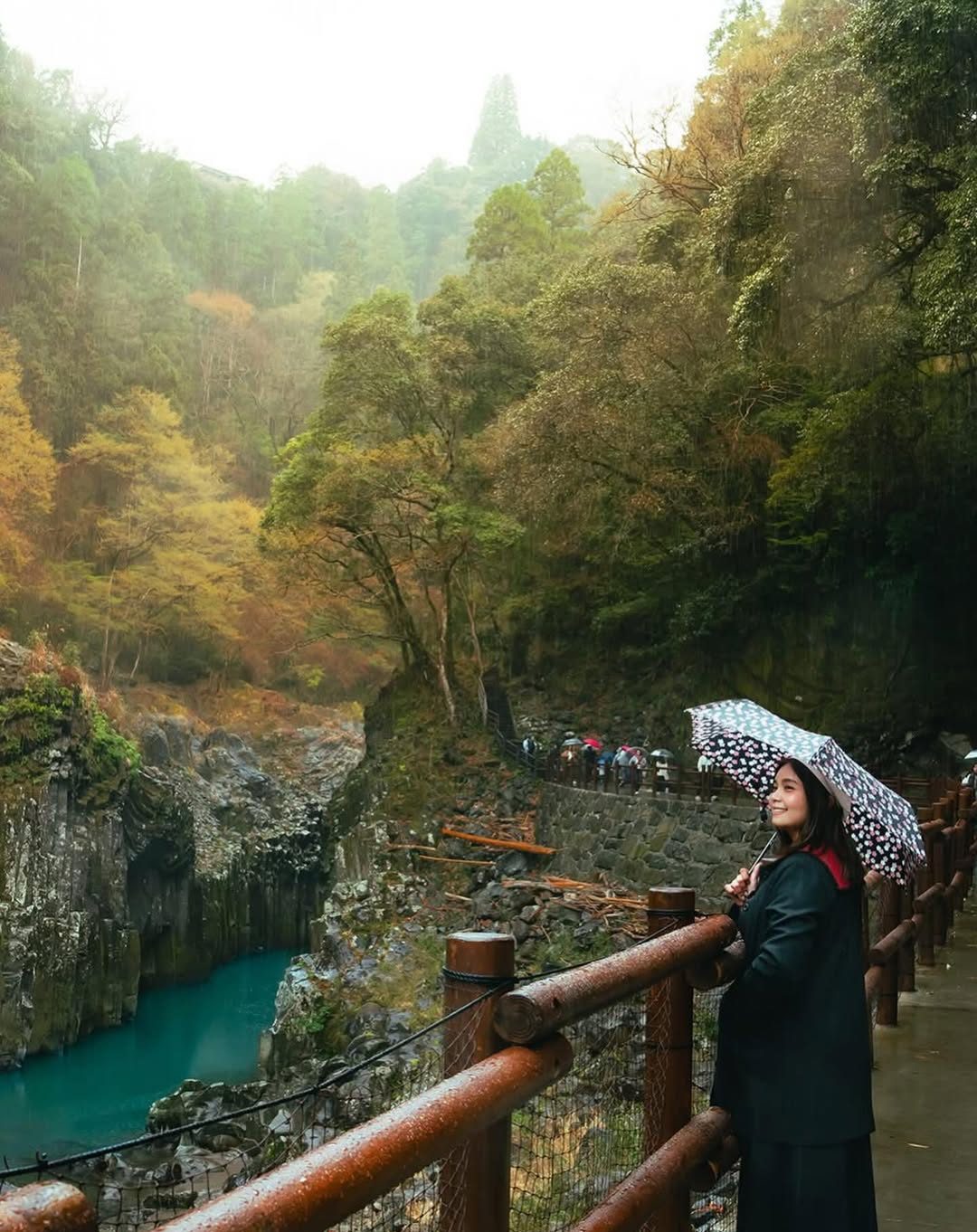
Boat operations stop during and after heavy rainfall. The river water turns from emerald-green to brown during high flow, and increased current makes rowing unsafe. The rental office updates operational status each morning around 8:00 AM on the official website. Check the weather forecast before booking, especially during Japan’s rainy season (early June through July).
Takachiho Gorge Walking Trail & Viewpoints
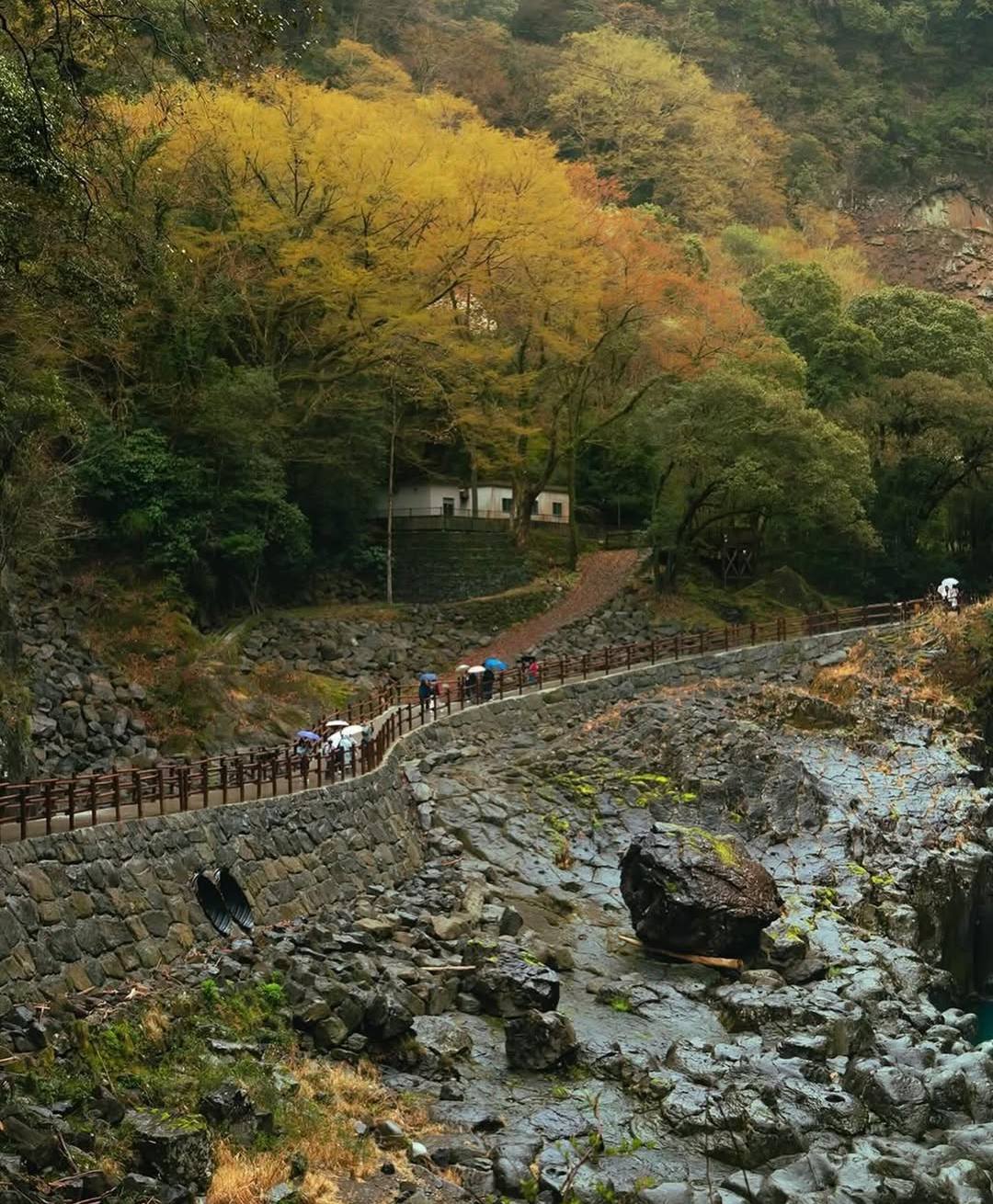
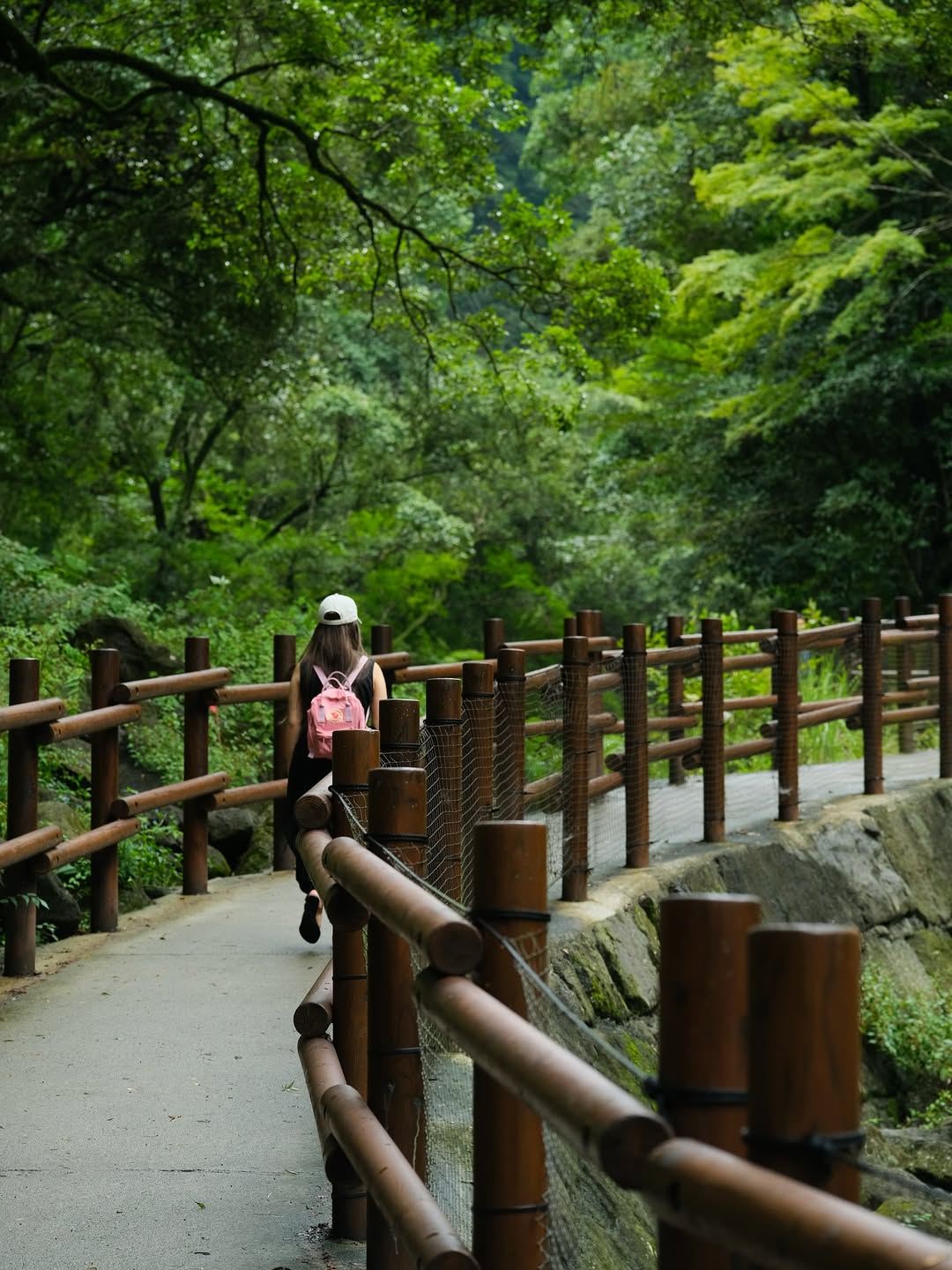
A 1-kilometer paved path runs along the gorge rim from the boat rental area to Takachiho Shrine. The trail takes 30 to 40 minutes to walk one way, though most visitors spend longer stopping at viewpoints and taking photographs. The path includes stairs and is not wheelchair accessible in several sections.
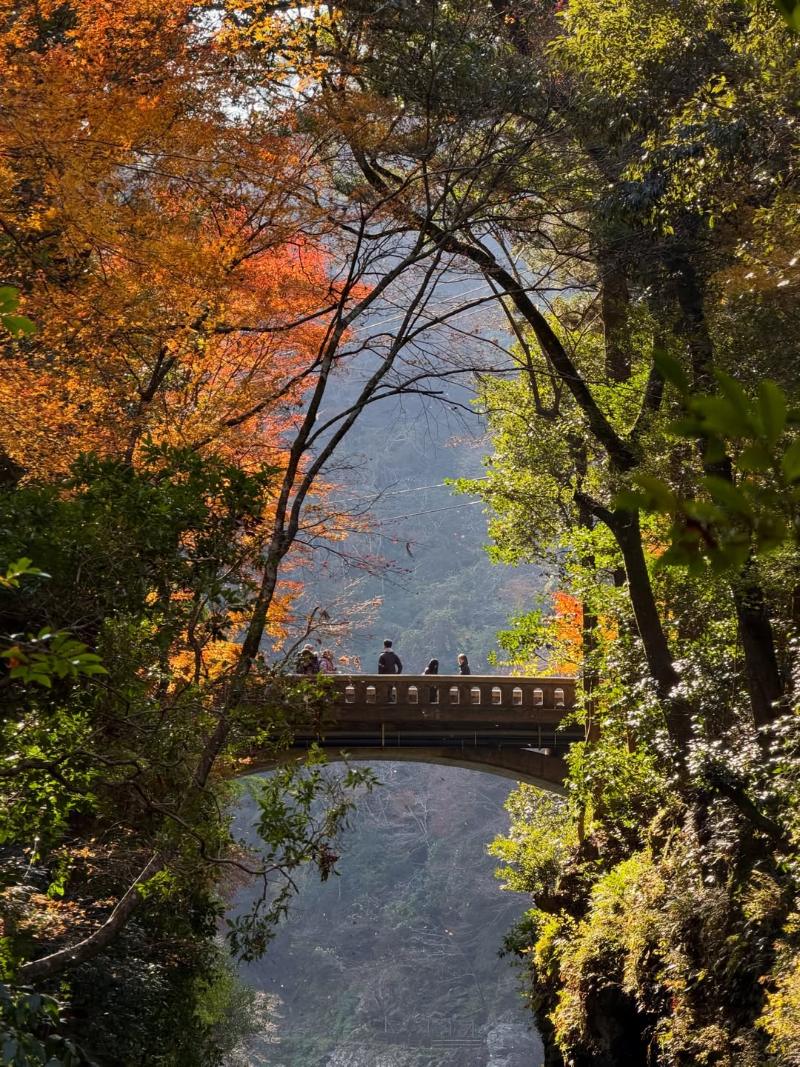
The trail follows the cliff edge at multiple elevations. At some points, the viewing platforms extend over the gorge where you can look straight down to the river 80 meters below. The path runs through a canopy of native maple trees that turn red and orange in October and November.
What are the main viewpoints?
The primary observation deck sits directly above Manai Falls with an unobstructed view of the 17-meter waterfall and the boats below. Mihashi Bridge offers a closer angle to the waterfall from a different position on the trail.
Three bridges cross the gorge — Shinbashi, Takachiho Ohashi, and Shinto Takachiho Ohashi. The walking trail provides the only vantage point where all three bridges are visible at once. Yaritobi marks the narrowest section of the gorge where the river width contracts to its minimum.
Near the midpoint of the trail, Kihachi no Chikaraishi sits beside the path — a 200-ton boulder that stands 3 meters high. According to legend, a demon named Kihachi threw this rock while fleeing from pursuing gods.
Morning hours provide better natural light for photography along most of the trail, particularly for shots of Manai Falls and the cliff formations. Shadows cover much of the gorge by mid-afternoon.
Skip the Bus Schedules – Join a Takachiho Gorge Tour
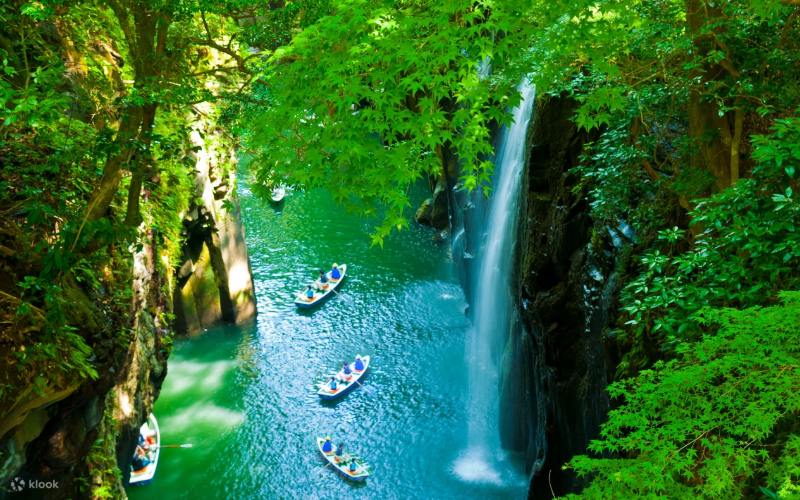
Tours from major cities handle the driving and pack in multiple stops: Takachiho Gorge, Mount Aso, local shrines, sometimes the Amaterasu Railway. Boat rentals are included in some tours but not all — verify before booking. Good option for seeing more than just the gorge without renting a car.
Mount Aso, Kusasenri, and Takachiho Gorge Day Tour
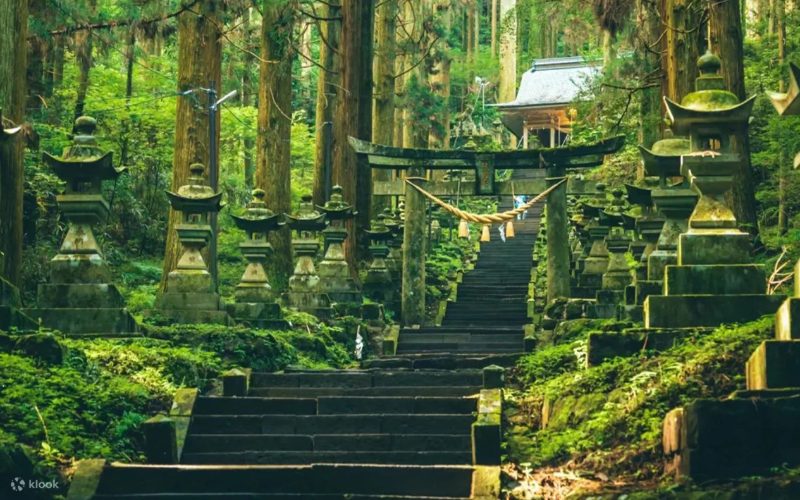
Takachiho Gorge Boat Ride, Kamishikimi Kumanoza Shrine/Takachiho Railway, Mount Aso, Kusasenri
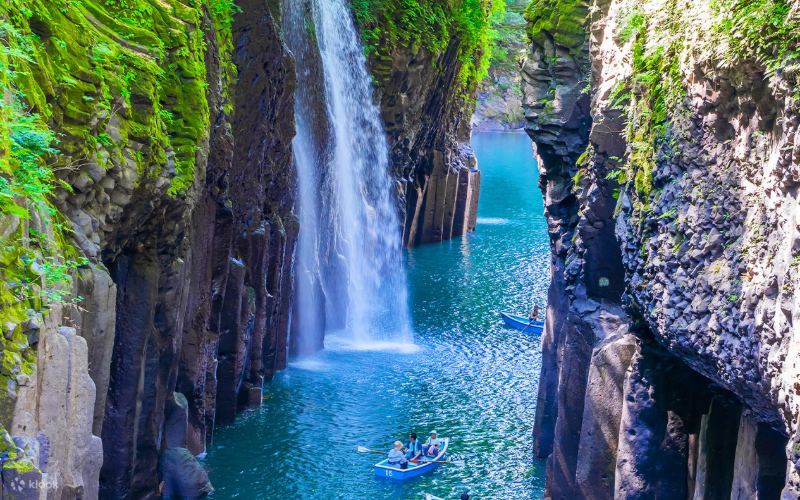
Takachiho Gorge & Kamishikimi Kumanoimasu Shrine or Upgrade to Boat Ride & Mount Aso

Takachiho Gorge (with lunch/optional boat ride) & Mount Aso & Kusasenri Day Trip
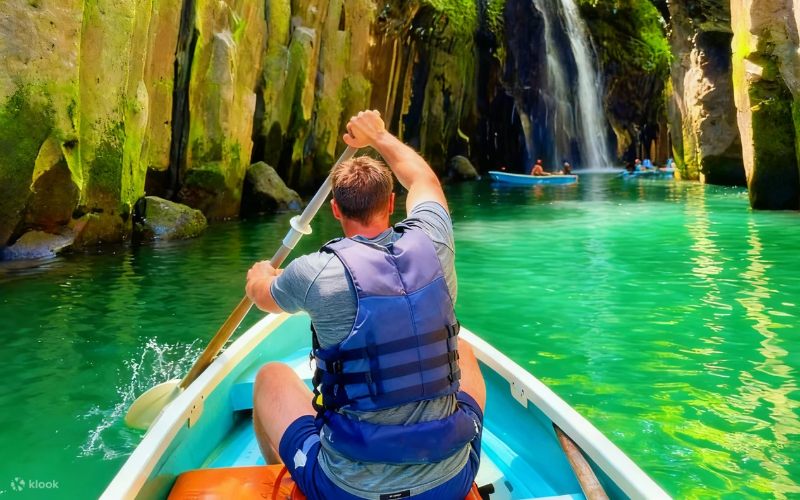
Takachiho Gorge, Takachiho Railway, Takachiho Boat Tour, Ama-no-Iwato One-Day Tour
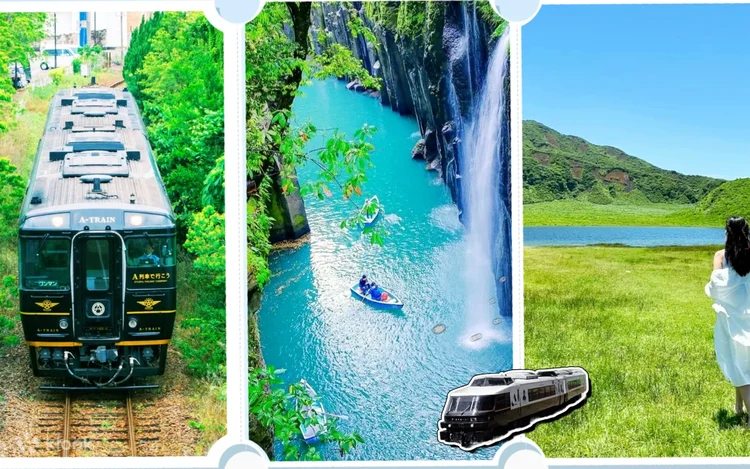
[Aso Boy Train Experience/Takachiho Cruise Experience] Takachiho Gorge + Kusasenri + Mt. Aso
Takachiho Gorge&Amaterasu Railway with Optional boat
Mt. Aso & Takachiho Gorge Tour with Optional Boat Ride
What is the best time to visit Takachiho Gorge?
Check the official website’s daily status update at 8:00 AM before traveling to Takachiho, particularly if visiting during June, July, or within 48 hours of heavy rainfall. The period between 10:00 AM and 12:00 PM provides optimal sunlight angles for photographing Manai Falls. After 2:00 PM, shadows cover much of the gorge floor and waterfall. The walking trail receives better light throughout the morning than in afternoon hours. Check our detailed guide on the best time to visit Takachiho Gorge.
Spring (March–April)
Temperatures range from 10°C to 20°C. New leaf growth creates bright green foliage along the gorge rim. Boat reservations become competitive as cherry blossom season draws visitors to Kyushu.
Summer (May–October)
Check the official website for current operating hours, as they may close earlier when capacity is reached. Night illuminations run from mid-May through November, lighting the cliff faces and waterfall until 10:00 PM. Temperatures reach 25°C to 35°C in July and August.
Autumn (October–November)
Peak season. Maple trees along the walking trail turn red and orange, contrasting with the dark basalt cliffs and green water. Boat reservations during October and November weekends fill up the moment they become available two weeks out. Temperatures range from 15°C to 25°C.
Winter (December–February)
Visitor numbers drop significantly. The gorge rarely experiences snow, but temperatures can fall to 0°C to 10°C. Boat operations continue during this season, though some days close due to icy conditions. Winter offers the highest chance of securing same-week boat reservations.
Location & How to Get There
Where is Takachiho Gorge located?
Takachiho Gorge is in Takachiho Town, northern Miyazaki Prefecture, on the island of Kyushu. The gorge sits approximately 60 kilometers southeast of Mount Aso in Kumamoto Prefecture. Takachiho has no train station — the nearest rail access is Nobeoka Station, 50 kilometers to the southeast.
Address: 1538-1 Takachiho, Nishiusuki District, Miyazaki 882-1103
How do I get to Takachiho from major cities?
By Car (Recommended)
Rental cars provide the most flexibility for visiting Takachiho and surrounding attractions. International visitors need an International Driving Permit.
- From Kumamoto: 90 km, approximately 1 hour 45 minutes via Route 218
- From Fukuoka: 180 km, approximately 3-3.5 hours via Kyushu Expressway
- From Miyazaki: 110 km, approximately 2.5 hours via Higashi Kyushu Expressway and Route 218
Parking is available near the gorge. Free parking lots exist at Ohashi (Dai San Parking), though these require a 20-minute walk down stairs to reach the main viewing area. Paid parking closer to the boat rental area fills quickly on weekends and holidays.
By Organized Tour (Recommended)
Day tours operate from Fukuoka, Kumamoto, and Miyazaki. Tours typically include transportation and a guide but not boat rental tickets. This option works well for travelers without rental cars or those unfamiliar with Japanese bus systems.
By Bus
From Kumamoto:
Direct bus from Kumamoto Station to Takachiho Bus Center. Journey takes 3 hours, costs around ¥2,700 one way. One departure daily at 9:11 AM, operated by Kyushu Sanko Bus and Miyazaki Kotsu. Advance online reservation recommended.
From Fukuoka:
Highway bus from Hakata Station to Takachiho Bus Center. Journey takes 3.5 hours, costs ¥5,000-7,000 depending on travel date. Four departures daily, operated by Nishitetsu Bus and Miyazaki Kotsu. Online reservations available.
From Miyazaki:
Take JR Nichirin or Hyuga limited express to Nobeoka Station (80 minutes, ~¥3,500). Transfer to Miyazaki Kotsu bus to Takachiho Bus Center (90 minutes, ¥1,880). Buses run approximately once per hour.
How do I get from Takachiho Bus Center to the gorge?
The gorge is 2 kilometers from Takachiho Bus Center — a 30 minute walk. The route includes uphill sections on the return journey.
Alternative transport within Takachiho:
- Taxi: Available at the bus center
- Bicycle rental: Electric bicycles available at the tourist information office (¥300/hour or ¥1,500/day)
- Seasonal shuttle bus: Operates on specific dates during peak congestion, connecting the gorge, Takachiho Shrine, and Amano-Iwato Shrine (¥200 per ride, cash only)
Most visitors combine the gorge visit with Takachiho Shrine, located roughly 1 kilometer from the bus center.
Parking at Takachiho Gorge
Takachiho Town operates five parking lots for gorge visitors. Two paid lots sit closest to the main attractions. Arrive before 9:00 AM on weekends and during peak seasons (October-November, holidays) to secure paid parking.
Paid Parking (¥1,000 per day):
No. 1 Oshioi Parking Lot
- Location: Directly at boat rental office and freshwater aquarium entrance
- Capacity: 20-30 spaces
- Walking distance: 0 minutes to boat rental
- Fills quickly on weekends and holidays
No. 2 Araragi Parking Lot
- Location: Near Shinbashi Bridge
- Capacity: Approximately 30 spaces
- Walking distance: 10-15 minutes to boat rental via gorge trail with stairs
Restrictions: Vehicles over 2 meters wide and 5 meters long cannot park in the paid lots. Groups traveling in large vehicles will be directed to disembark at Ohashi Parking Lot. When paid lots reach capacity, traffic staff will direct vehicles to available free parking. Follow staff instructions during peak periods.
Free Parking:
Three free lots (Ohashi, Oshikata, Taguchino) are available but require 20-30 minute walks with significant stairs to reach the main viewing areas.
What else is there to see in Takachiho?
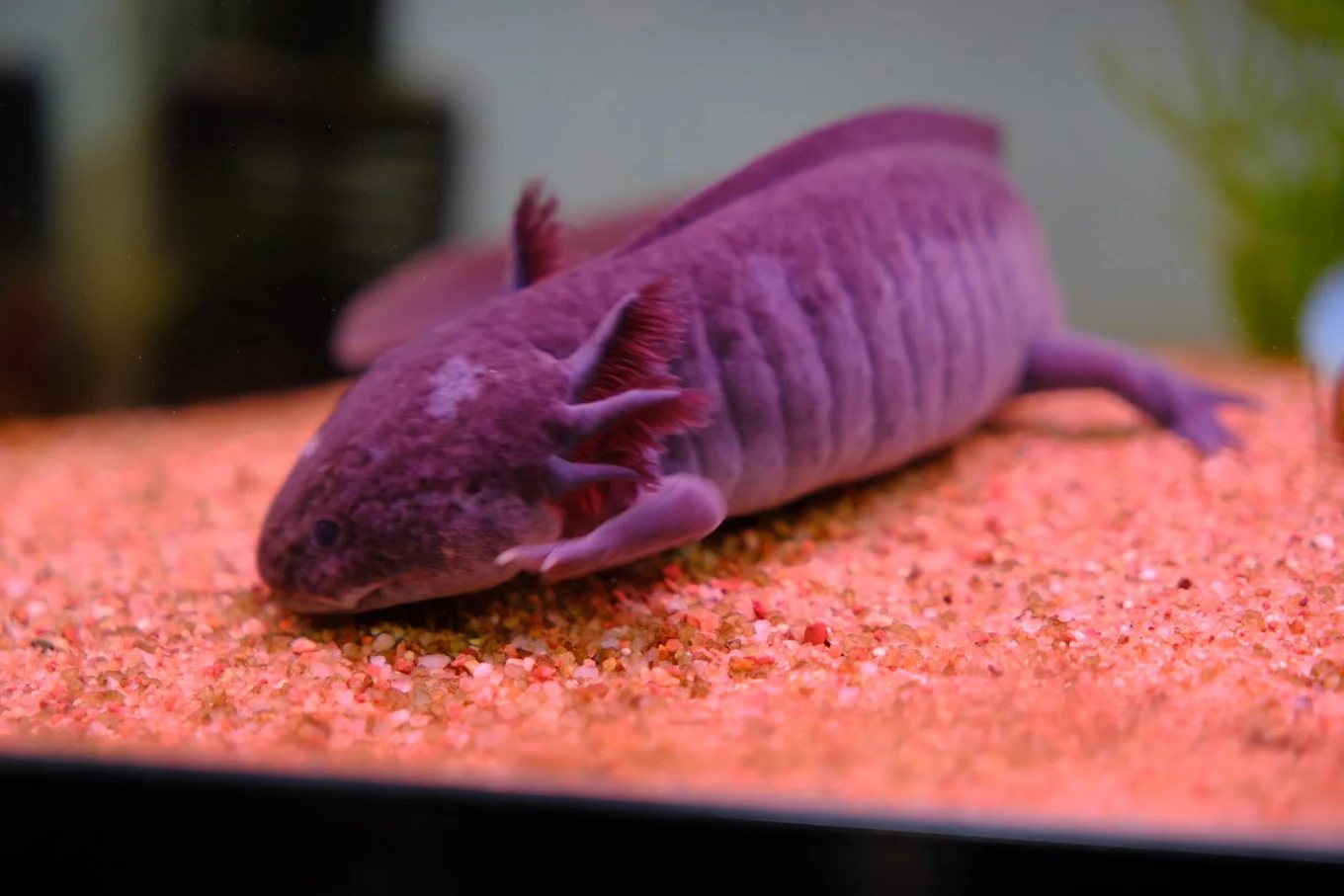
Takachiho Gorge Freshwater Fish Aquarium
Location: At the No. 1 Oshioi Parking Lot, directly above the boat rental dock
Entrance: ¥600 (adults), ¥300 (elementary and junior high school students)
Hours: 9:00 AM–4:00 PM
Features: Small aquarium displaying freshwater fish, eels, and amphibians native to the Takachiho area and Gokase River. The facility is compact but provides a quick look at local aquatic species. The parking lot gardens feature seasonal plantings and autumn foliage.
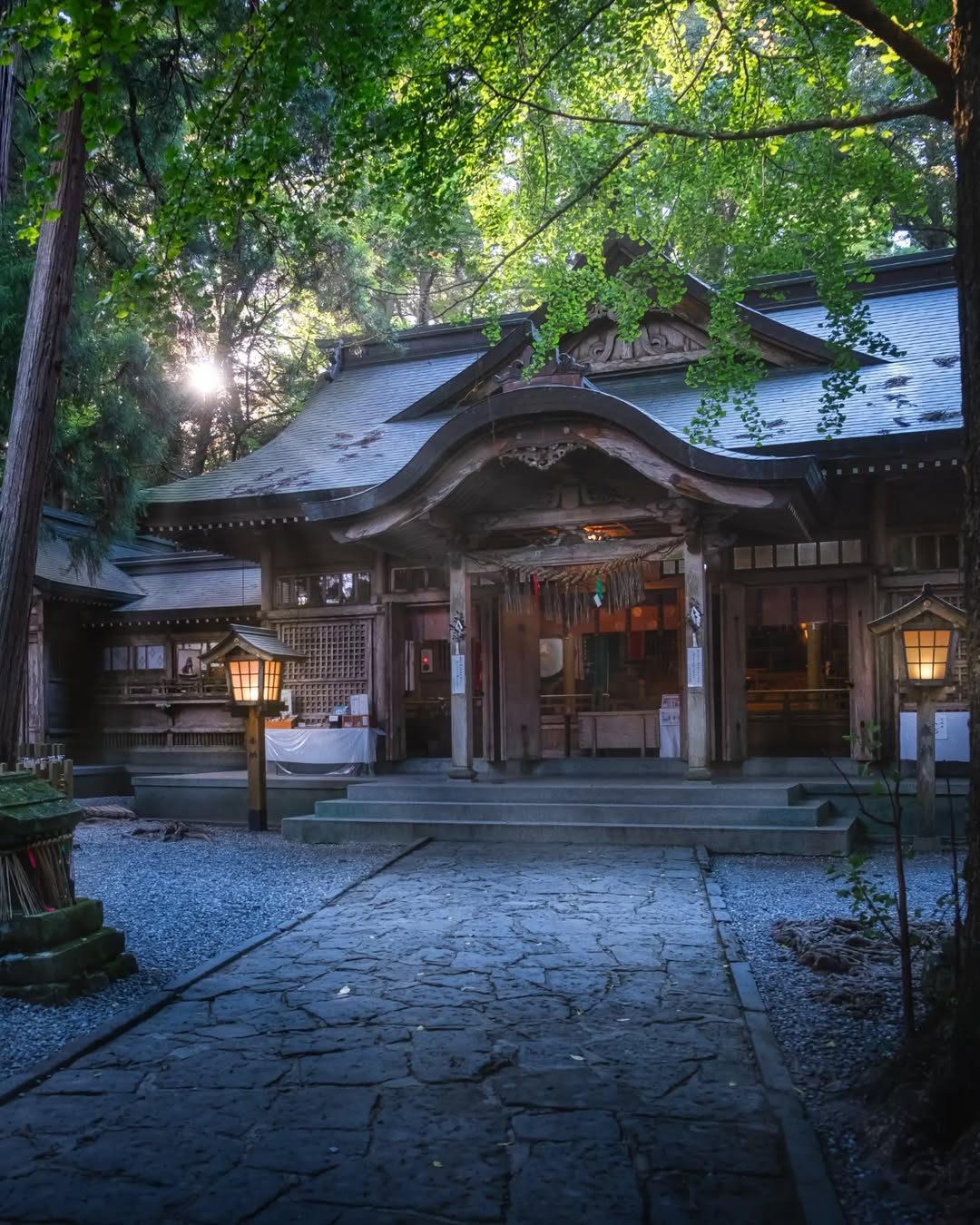
Takachiho Shrine
Distance: 1 km from gorge (15-minute walk from Takachiho Bus Center)
Age: Founded approximately 1,900 years ago
Features: Earth-toned buildings surrounded by ancient cedar trees, including Meoto-sugi—two cedar trunks grown into one, considered a symbol of marriage blessings
Yokagura performances: Abbreviated kagura dance performances held nightly at 8:00 PM (¥1,000, one hour). Full 33-dance performances run from mid-November to early February in villages throughout Takachiho
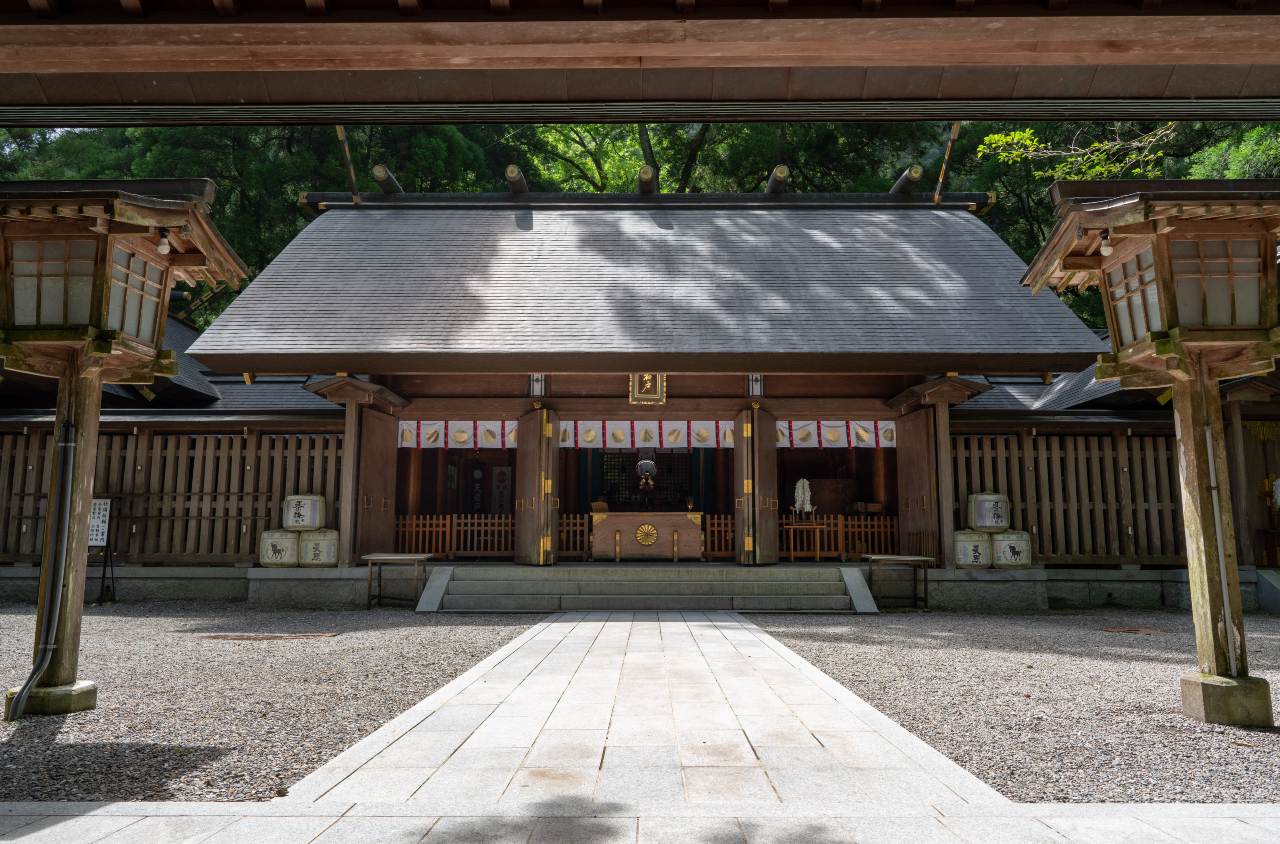
Amano Iwato Shrine
Distance: 10 km from Takachiho town center (15 minutes by bus from Takachiho Bus Center, ¥200 one way, hourly service)
Mythology: Built near the cave where Amaterasu hid herself, according to the Kojiki and Nihon Shoki
Tours: Free guided tours to the observation deck run every 30 minutes. A Shinto priest leads visitors to view the cave across the Iwato River (cave cannot be approached directly)
Note: Photography of the sacred cave is prohibited
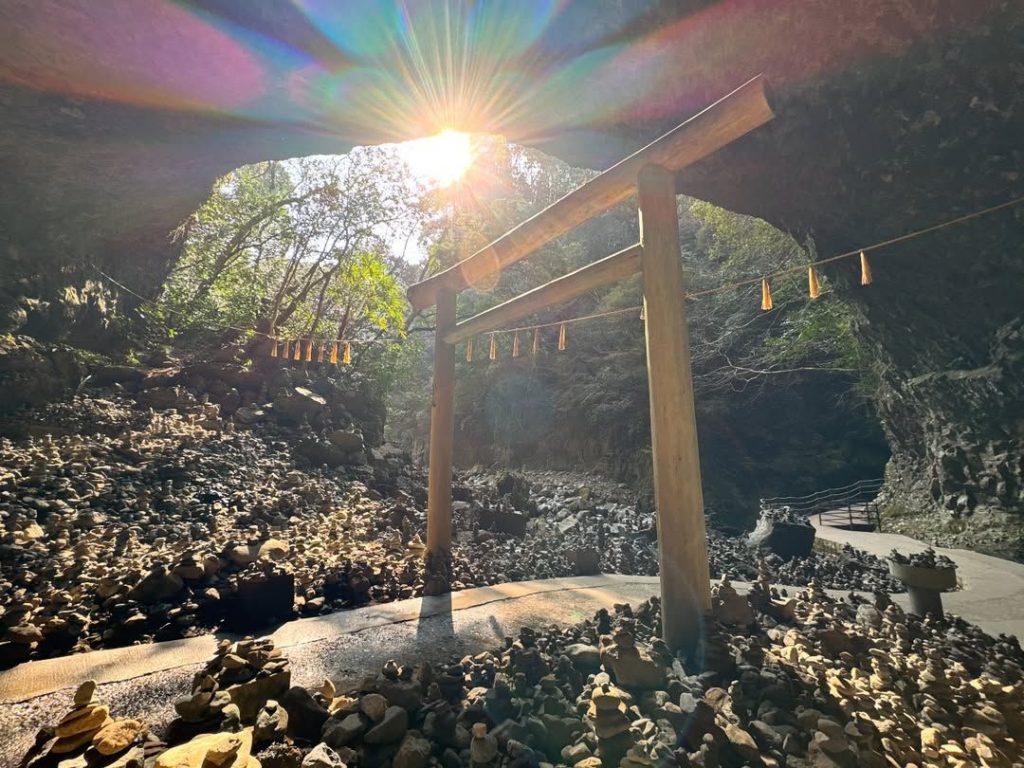
Amanoyasukawara
Distance: 10-minute walk from Amano Iwato Shrine along the Iwato River
Description: Large cave where eight million gods gathered to discuss bringing Amaterasu out of hiding
Feature: Thousands of small stacked stones placed by visitors line the path and fill the cave interior, creating an otherworldly atmosphere
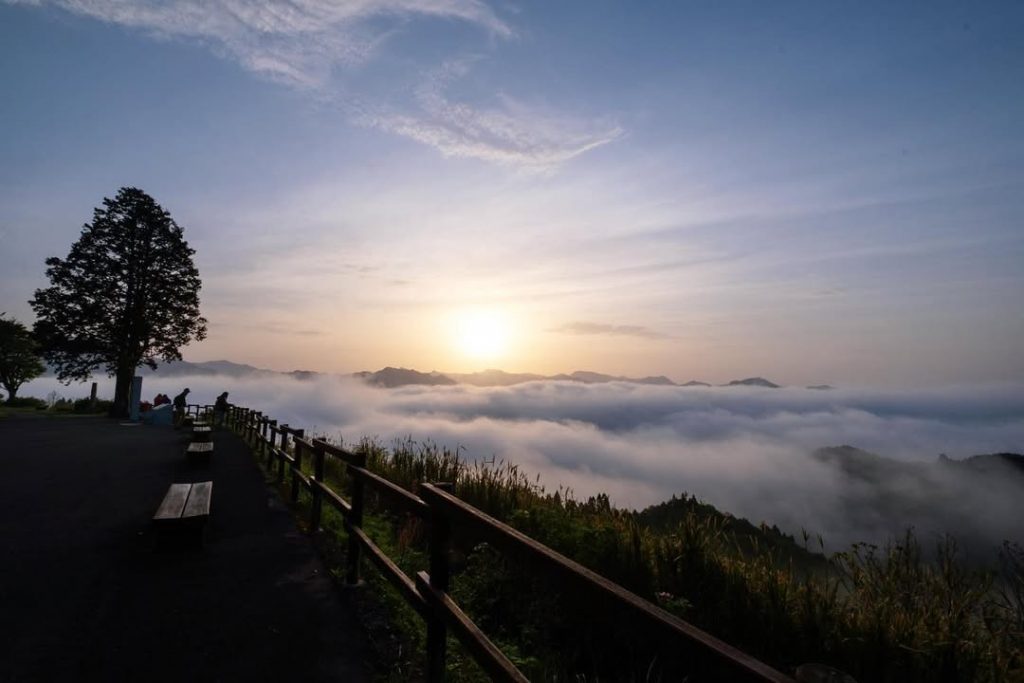
Kunimigaoka
Distance: 15 minutes by Takachiho Community Bus from bus center
Elevation: 513 meters
Views: Panoramic views of Aso Five Peaks (west), Sobo mountain range (north), and Takachiho Basin (east)
Sea of clouds: Visible on clear mornings from mid-September to late November after cold nights with temperature drops. Best viewing time is early morning
Recognition: Received a Michelin Green Guide star in 2011
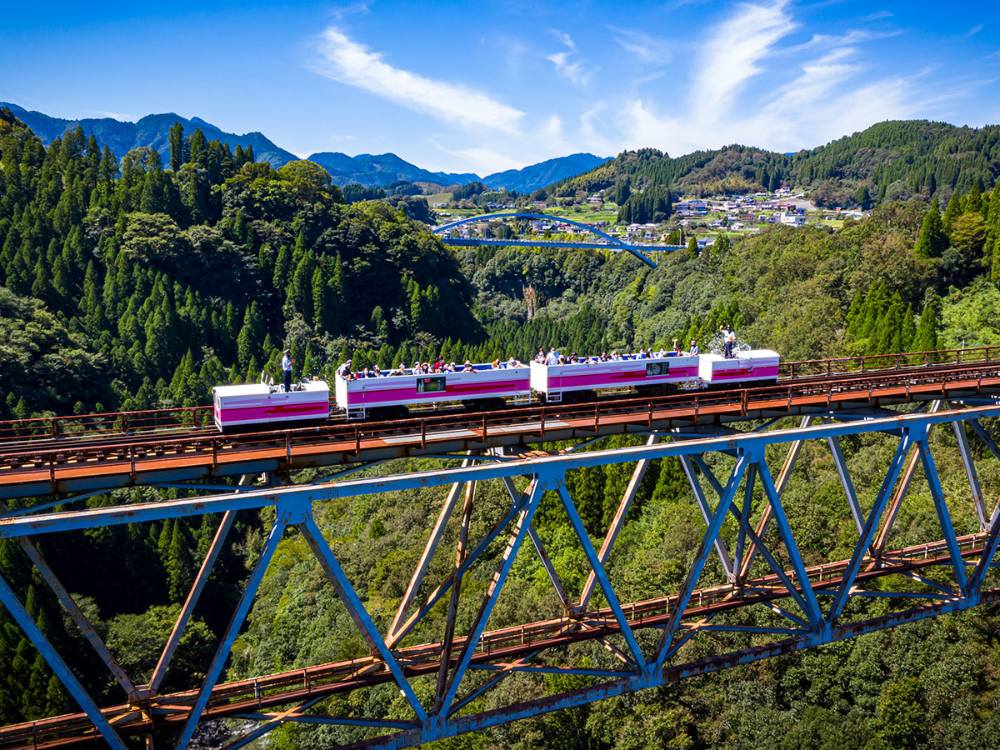
Takachiho Amaterasu Railway
Distance: 10-minute walk from Takachiho Bus Center
Duration: 30-minute round trip (5 km route)
Fare: ¥1,800 (adults), ¥1100 (elementary/middle school), ¥600 (toddlers), ¥100 entrance fee
Highlight: Crosses Takachiho Bridge, Japan’s highest railway bridge at 105 meters. The Grand Super Cart features a glass floor for views of the valley below
History: Former JR local line damaged by 2005 typhoon, reopened as tourist railway in 2010
Hours: Reception open 9:25 AM–3:25 PM (no advance reservations)